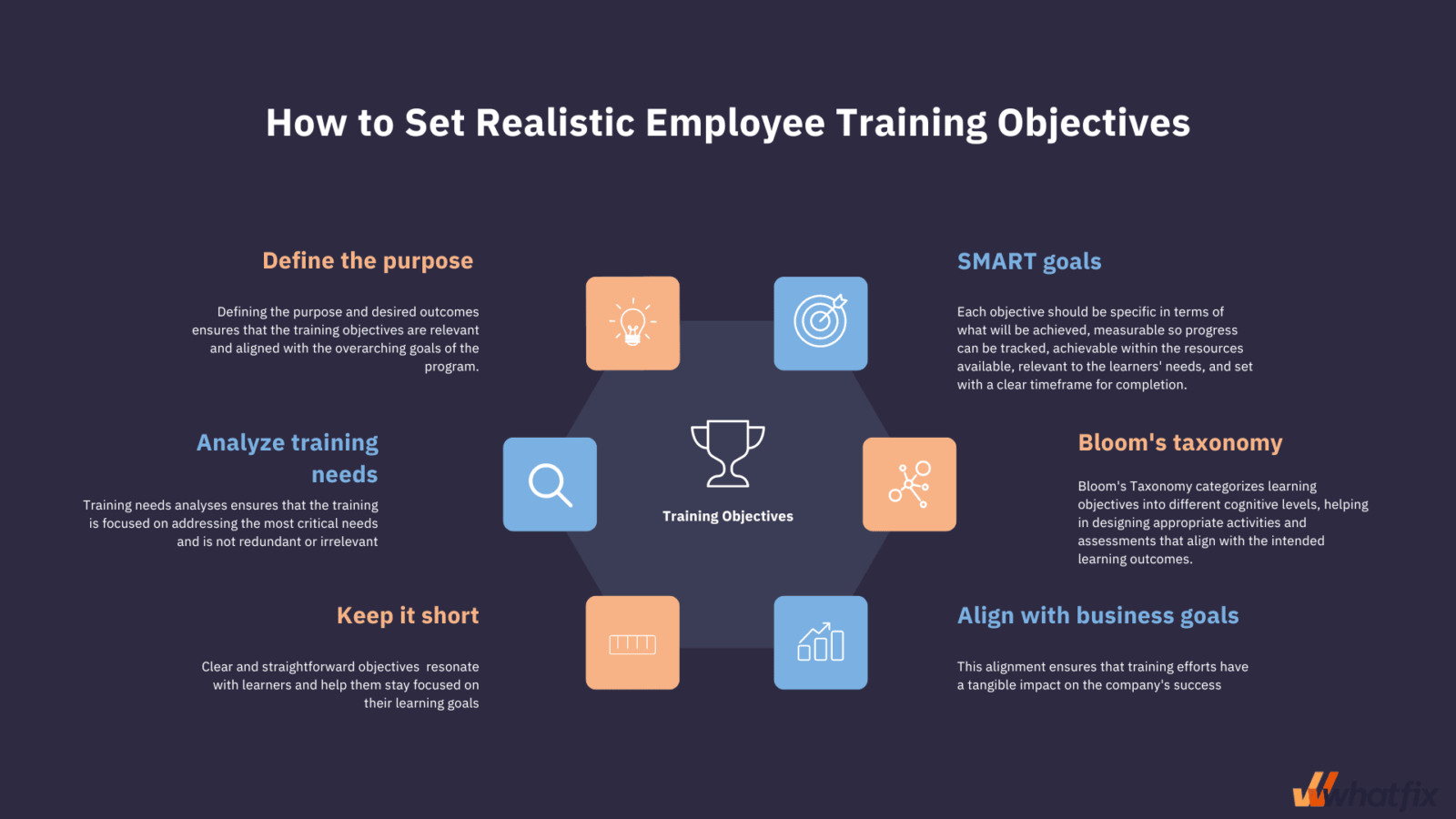
The goal of employee training is to improve their job-specific knowledge and skills to become proficient in their roles. Employee training is a crucial aspect of learning that helps organizations achieve their targets and goals.
In today’s competitive business environment, employee training is considered a vital tool for improving individual and organizational performance. It prepares employees to meet the evolving organizational needs and equips them with the necessary skills and knowledge to succeed in their roles.
Employee training aims to increase productivity, improve customer satisfaction, boost sales, and enhance overall performance. It helps employees to gain new knowledge or information that will enable them to do their job well, to learn physical skills required to operate machinery efficiently, and to influence employee attitudes and perceptions towards learning or organizational change. Setting clear and measurable training goals for employees is crucial to ensure that learning outcomes align with organizational objectives.

Credit: www.linkedin.com
Importance Of Employee Training
Employee training is crucial for the growth and success of any organization. One of the goals of employee training is to ensure that employees have the necessary skills and knowledge to perform their roles effectively. Proper training can increase productivity, improve overall performance, and help achieve company goals.
The Importance of Employee Training
Training is an integral part of employee development, and effective training can produce numerous benefits for both employees and organizations. Proper training programs can improve job-specific knowledge and skills, enhance attitudes and perceptions, and ultimately increase overall performance. In this blog post, we will discuss the significance of employee training and how each goal contributes to the development of employees.
Increase Job-Specific Knowledge and Skills
One of the primary goals of employee training is to increase job-specific knowledge and skills. It is essential for employees to have the necessary skills and knowledge to perform their job roles effectively. By honing these skills, they can be more confident in their ability to perform their tasks, which can lead to increased productivity, fewer errors, and a better quality of work. Training can include technical skills, soft skills, and industry-specific knowledge, providing employees with a complete understanding of their roles and responsibilities.
Improve Attitudes and Perceptions
Another crucial goal of employee training is to improve attitudes and perceptions. Training isn’t just about developing new skills but also creating a positive work environment. Engaging and interactive training programs can help foster a sense of community among employees, increasing their motivation and commitment to their jobs. By enhancing their attitudes and perceptions towards work, training can also boost job satisfaction, reduce staff turnover, and improve employee morale.
Enhance Overall Performance
The primary objective of employee training is to enhance overall performance. Training can help develop various skills and knowledge, leading to better job performance and ultimately improving organizational success. Improving performance can include a wide range of goals, such as reducing errors, increasing efficiency, increasing customer satisfaction, and improving teamwork. By investing in employee training, organizations can ensure that employees remain up-to-date on the latest industry developments, leading to continuous improvement and a competitive edge.
In conclusion, employee training is crucial for the growth and development of both employees and organizations. By increasing job-specific knowledge and skills, improving attitudes and perceptions, and enhancing overall performance, organizations can achieve their objectives effectively. Investing in employee training programs demonstrates that an organization values its employees and is committed to helping them realize their full potential, leading to a more engaged, motivated, and productive workforce.
Objectives Of Employee Training
Employee training is an essential investment for any company that wants its workforce to develop new skills, knowledge, and abilities. The primary goal of employee training is to enhance job performance and productivity. While some training programs may aim to foster teamwork, leadership, and creativity, others focus on compliance, safety, and technological advancements. The objectives of employee training can be categorized into three main areas:
Gain New Knowledge And Information
One of the primary objectives of employee training is to teach new information and knowledge related to the job. For example, new employees may require training on company policies, procedures, products, services, or technology. Existing employees may need to be trained on new regulations, software, or work processes. Training programs that aim to provide new knowledge and information to employees help them to stay updated with the industry trends and enhance their skills.
Learn Physical Skills
Another objective of employee training is to teach physical skills that may be required to perform a job or task efficiently. For instance, employees working in manufacturing or construction may need training on using heavy machinery safely and effectively. Other employees, such as sales or customer service executives, may require training on communication, negotiation, problem-solving, or conflict management. Hands-on training programs that focus on physical skills can help employees to improve their work quality and productivity.
Influence Employee Attitudes And Perceptions
In addition to providing new information or physical skills, employee training programs may also aim to influence employee attitudes and perceptions. Attitude building training programs help employees to develop positive thinking, motivation, and teamwork skills. For example, diversity and inclusion training may help employees to understand and appreciate cultural differences, leading to a more inclusive work environment. Such training programs can also help employees to develop a growth mindset, embrace challenges, and become more confident in their abilities.
Creating Smart Training Goals
Creating SMART Training Goals can help establish clear, measurable and achievable objectives for employee training. The main goal of employee training is to develop skills and knowledge needed for individuals to perform their roles effectively, improve performance, increase productivity, and achieve organizational goals.
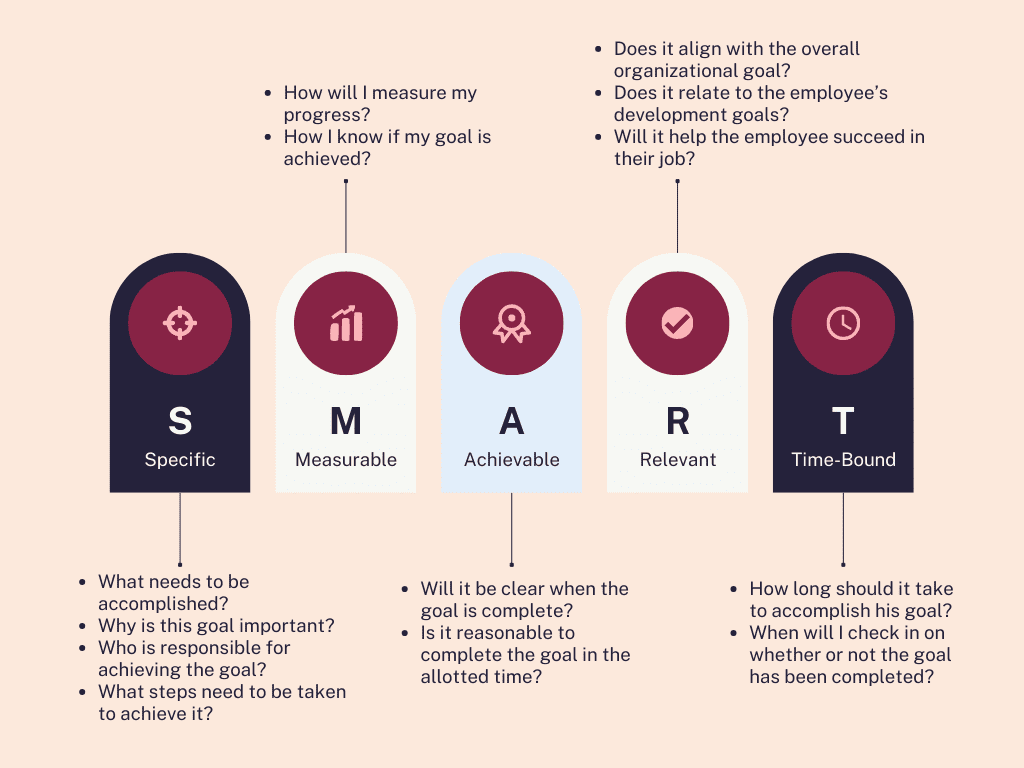
SMART framework encompasses Specific, Measurable, Achievable, Relevant, and Time-bound goals to create an effective employee training program.
Creating SMART Training Goals
Employee training is a crucial aspect of running a successful and productive organization. However, it is equally important to ensure that the training goals are clearly defined, measurable, and focused on achieving specific outcomes. This is where SMART training goals come into play. SMART is an acronym that stands for Specific, Measurable, Attainable, Relevant, and Time-bound. By following the SMART framework, organizations can set clear and achievable training goals that lead to tangible results.
Specific Goals
Specific goals refer to training objectives that are well-defined and unambiguous. They are goals that answer the questions of who, what, where, when, and why. For instance, a specific training goal could be to train the customer service representatives of a hotel on the use of a new booking software.
Measurable Goals
Measurable goals are training objectives that are quantifiable. They are goals that can be measured using specific metrics or indicators. For example, a measurable training goal could be to increase the customer satisfaction rating of a hotel by 10% within six months of implementing the new booking software.
Attainable Goals
Attainable goals refer to training objectives that are realistic and achievable. They are goals that take into account the available resources, time, and skills of the employees. For instance, an attainable training goal could be to train all the customer service representatives of a hotel on the use of the new booking software within three months.
Relevant Goals
Relevant goals are training objectives that are aligned with the overall objectives of the organization. They are goals that contribute to the overall success of the organization. For example, a relevant training goal could be to improve the customer experience and increase loyalty by training the customer service representatives on the use of the new booking software.
Time-bound Goals
Time-bound goals are training objectives that have a specific deadline or timeframe. They are goals that are time-bound and have a sense of urgency. For instance, a time-bound training goal could be to train all the customer service representatives of a hotel on the use of the new booking software within the first quarter of the year.
In conclusion, creating SMART training goals is an essential part of employee training. By following the SMART framework, organizations can set clear and achievable training goals that lead to concrete results. Specific, measurable, attainable, relevant, and time-bound goals are the key ingredients of effective employee training.
Credit: whatfix.com
Examples Of Training Goals
HTML syntax:
Employee training is an essential aspect of any business, providing valuable opportunities for employees to learn and develop skills necessary for their roles. By setting specific goals for employee training, an organization can ensure that training is effective in meeting the needs of the business and its employees. Let’s explore some examples of training goals:
Increased Productivity
One of the primary goals of employee training is to improve productivity. By providing training that focuses on improving workflow, time management, and efficiency, employees can learn how to work smarter and accomplish more in less time. This, in turn, can lead to increased productivity and profitability for the business.
Improved Customer Satisfaction
Another common training goal is to improve customer satisfaction. By providing training that focuses on communication, empathy, and problem-solving, employees can learn how to better meet the needs of customers and exceed their expectations. This can result in improved customer loyalty, referrals, and overall business success.
Increased Sales
Employee training can also help to increase sales by providing employees with the skills necessary to promote products or services effectively. By providing training in sales techniques, customer relationship management, and product knowledge, employees can become more confident and effective salespeople. This can result in higher revenue and profitability for the business.
Credit: www.insperity.com
Frequently Asked Questions
What Is An Example Of A Training Goal?
A training goal might be raising customer satisfaction scores, improving call handling time, or teaching a new system. Using SMART goals helps keep targets clear, measurable, and realistic.
What Is The Primary Aim Of Employee Training?
The main aim is to help employees perform their roles well by building job specific skills and knowledge, which supports higher productivity, better service, and stronger overall results.
What Are The 5 Objectives Of Training And Development?
Key objectives include improving job proficiency, adding new skills, strengthening physical or task specific abilities, shaping positive attitudes, and raising overall organizational performance through clear, trackable outcomes.
What Is Smart Objective For Employee Training?
A SMART objective sets a training target that is specific, measurable, attainable, relevant, and time bound so progress is easy to track and success is clearly defined.
What Is The Importance Of Employee Training?
Employee training matters because it builds competence, reduces errors, supports consistent quality, and often leads to higher productivity, better performance, and greater job satisfaction.
Conclusion
Employee training works best when it connects everyday tasks with the larger direction of the company. It gives people the skills, tools, and confidence they need to handle their roles well, adapt to changes, and support high quality work. Clear, measurable objectives help managers track progress and make sure training time truly improves performance. When you ask what is the goal of Employee Training, the simple answer is to close skill gaps, strengthen consistency, and align employees with company standards. Over time, strong training builds a capable, confident workforce that drives long term growth and stability.