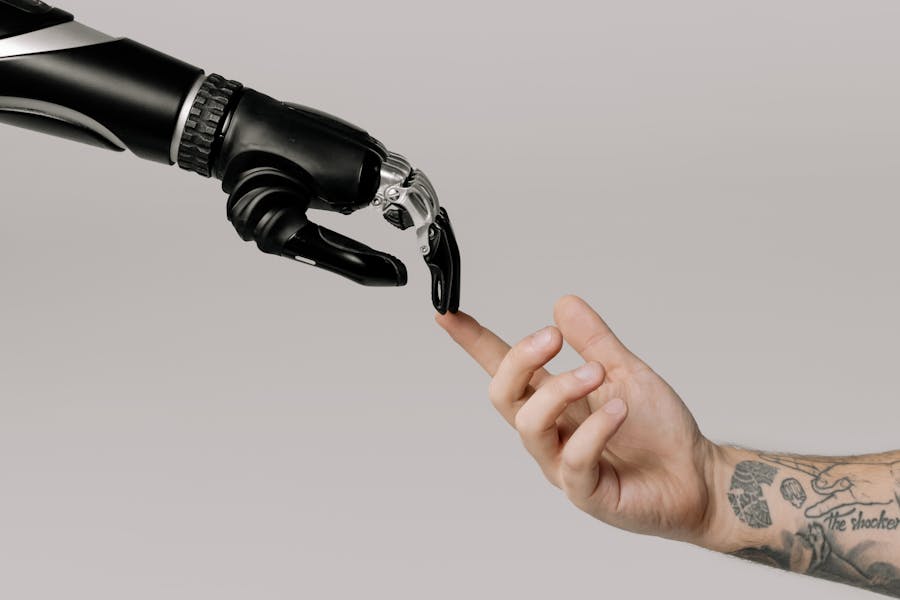
Until the start of this decade, this question would have been something from a science fiction film. Customer service jobs are a huge wealth-creating industry, and this is the case across emerging economies and those considered more established.
For instance, around 4% of the UK’s workforce is estimated to work in call center roles alone. This number stretches closer to 10% if we include hospitality, taxi drivers, and other customer service-driven roles, all in the firing line for automation over the next 10 to 15 years. AI could be at the dawn of the biggest societal change ever seen, eclipsing even the internet. So, is it a viable question that the customer service industry could be the first to act as a broader experiment to see how wider automation might look in the long run?
Eradicating might be the wrong word to use, but a transformative change will inevitably see human-based roles disappear over the next 20 years. The real question is how profound these changes will be and whether they will represent a net positive or benefit in the long run.
Exploring The Facts
While technology has been impacting other industries, such as entertainment and gaming, much more profoundly and over a longer period, it was only a matter of time before service industries started to feel these impacts, too. Future gaming technology and innovations will look at the disruptive innovation of AI from a different perspective—any innovation in that field is primarily focused on enhancing graphics, game design, the sophistication of NPC and RNG technology, etc.
However, the customer service industry’s onus is essentially to streamline businesses and make them more cost-effective. The brutal truth is that “cost-effective”—at least in this context—means humans are surplus to requirements in these roles. Business owners have argued that these industries are already struggling to fill vacancies, find full-time staff, and retain them for longer periods.
Service Industry Dilemmas
As more people believe we are not too far away from AI becoming self-aware, this would again mean that there’d be a growing urge for business owners to opt for these cheaper, automated options, which would often be able to do the job as adequately, or in some cases, better than humans.
In restaurants and bars in particular, robot waiters are killing two birds with one stone by cost-effectively filling the employment gap.
Of course, there’s a balance to strike here, and a very important one at that. Suppose business owners within these industries become too overly reliant on robots or overlook the human cost that can come with such significant job losses in these industries. In that case, there’s a chance that broader economic downturns in the long term could outweigh any benefits in the short term.
Ultimately, due to mass automation and job losses, fewer people will have money to spend at their businesses, which will inevitably become counterproductive if implemented right across the economic landscape.
Office-Based Customer Service Roles
It’s perhaps a more pressing matter in office-based roles, where automation already has a significant impact. Millions of people in administrative and customer service roles are growing concerned as they watch highly sophisticated chatbots perform menial tasks they previously used to.
AI is also impacting customer service roles at a managerial level, where generative programs can provide full-scale, detailed summaries of calls that have taken place a few seconds earlier, often with minute and impressive accuracy. There will still need to be a degree of human oversight, but it’ll be something that will be put into the hands of a smaller, core group, likely those with the most experience. This is a trend happening in some sectors already, so it’s something that AI regulators, companies, and those employed in industries that could be in the line of fire to keep their ear to the ground about any changes that could be on the horizon.
Final Thoughts
Technology often begins by handling simple tasks, then grows to influence larger parts of an industry. This raises clear concerns for workers, yet the wider economic impact is just as important. If rapid automation creates financial strain for communities or reduces overall spending power, regulation will likely step in to slow job losses and encourage a balanced approach. Business decisions usually follow long term profit, so if removing too many human roles harms revenue, companies will adjust. This perspective supports the idea that Will AI Eradicate The Human-Based Customer Service Industry is not a simple yes or no question. Complete replacement is unlikely soon, since long term stability remains more valuable than short term cost cutting.